Define the privacy problem precisely
“More privacy” can mean several different things: a direct view from the next balcony, pedestrians looking up from a pavement, or the feeling of sitting in an exposed corner. Each calls for a different response. Sit where you intend to spend the evening and identify the exact direction that feels uncomfortable. A small adjustment to the chair may solve more than a large screen.
Sketch the sightline on a simple plan. Notice whether the view comes from above, beside or below. A low panel might interrupt a seated side view but do nothing about a higher window. Do not buy a wraparound covering before understanding this geometry. It can reduce your own outlook while leaving the troublesome angle completely open.
Check permission before selecting a fixing
Building rules may restrict the height, colour, material and location of balcony screens, even when the screen appears temporary. Lease terms, condominium rules, strata requirements and façade policies vary. Ask the responsible manager for the relevant written requirements. Fire-safety and escape considerations can also affect what is permitted, especially where a balcony forms part of a wider building strategy.
Never assume that drilling into an exterior wall or clamping to a guardrail is harmless. Waterproofing, structural elements and protective coatings can be damaged by small interventions. A removable fixing still needs approval and a suitable load path. If a supplier describes a product as suitable for balconies, that does not establish suitability for your particular building, height or exposure.
Understand what wind changes
A solid screen catches wind. That force has to go somewhere, through the panel, its supports and its attachments. A lighter panel is not automatically safer, and a perforated one is not automatically suitable for a windy location. Freestanding designs also need a verified stability arrangement; adding improvised weight can create separate floor-loading and handling problems.
Ask for product instructions that address your installation, and consult the building manager or a qualified professional where required. Do not use loosely tied fabric, unsecured reed rolls or makeshift cable ties as a substitute for a designed support system. Remove or stow movable screening before adverse weather when the instructions require it. Never lean outside the guardrail to reach a fixing.
Choose openness with purpose
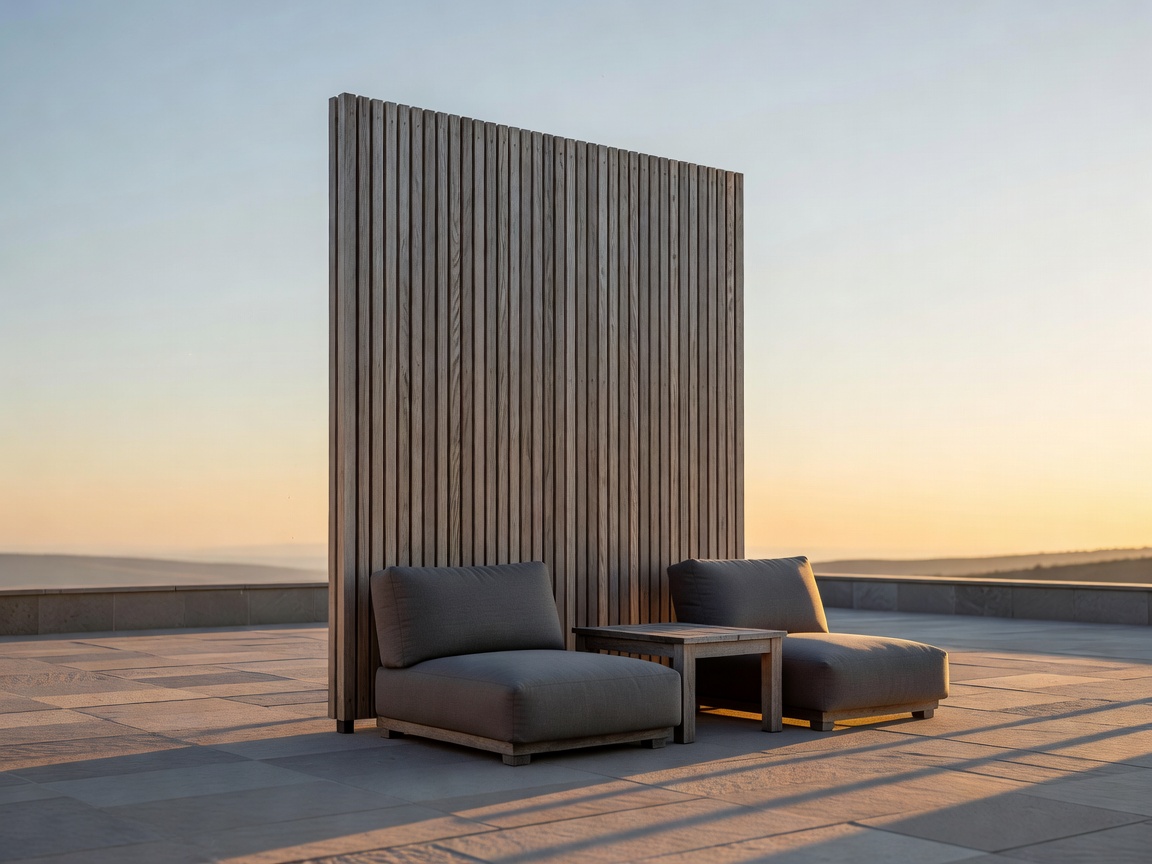
Slatted panels can interrupt an oblique view while keeping some light and airflow. Their effectiveness depends on spacing and viewing angle, not just the advertised overall height. Woven materials may provide a softer background, but their edges, fire performance and weather durability need attention. A short return beside the chair may be more effective than lining the whole perimeter.
Plants can soften a boundary without creating a continuous wall. However, pots add weight, watering introduces runoff, and growth can change both wind resistance and sightlines. The Royal Horticultural Society provides guidance on container planting, while local horticultural services can help with climate-specific choices. Use suitable containers, prevent items falling and avoid placing pots where they could become steps beside the railing.
Test privacy when the lights are on
Evening lighting changes the balance between inside and outside. A thin fabric that looks opaque in daylight can reveal shapes when a bright lamp sits behind it. Test a sample from a safe, legitimate viewpoint, ideally with another person checking the effect. Do not rely on marketing photographs taken under different lighting conditions.
Move light toward the activity and away from the screen if it creates a strong silhouette. A downward-facing table lamp often gives a calmer result than illuminating a person against a bright panel. Avoid pointing a light toward a neighbouring home in an attempt to create privacy. The goal is a comfortable place to sit, not visual competition across the building.
Keep the boundary easy to maintain
A good screen should allow routine inspection, cleaning and access to drains or building fittings. Leave enough room to remove fallen leaves and check for trapped moisture. Watch for corrosion, loosened fixings, frayed fabric and movement after windy weather. Follow the manufacturer’s maintenance schedule rather than waiting for the installation to look visibly damaged.
Finish by revisiting the original seated view. If one small panel or a changed chair angle provides enough comfort, stop there. A balcony can feel sheltered while retaining sky, air and a sense of connection to the outdoors. Privacy is a tool for comfortable use, not a reason to turn every open edge into a wall.
No screen is a guardrail upgrade. Decorative screening does not replace a compliant barrier or make an unsafe railing safe. Keep required ventilation and escape access clear.